

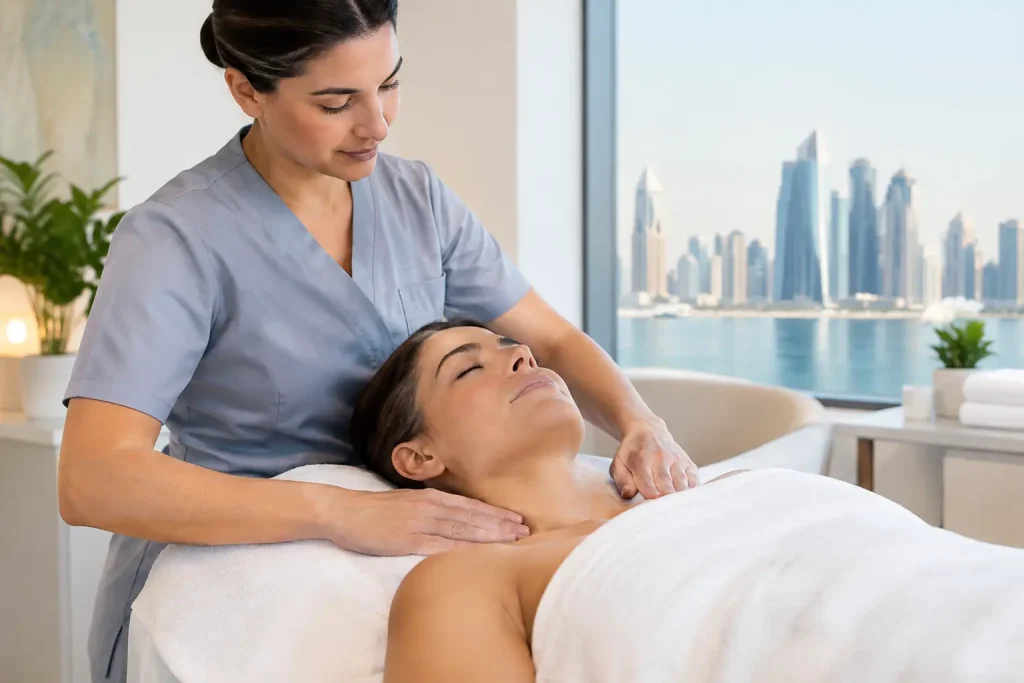
Swelling can make an otherwise exciting surgical result feel unfamiliar at first. For patients considering post surgery lymphatic drainage Doha care, the goal is not to rush recovery or change the outcome of surgery. It is to support comfort and the body’s natural fluid movement at the right time, with the right technique, and only after clearance from the operating surgeon.
Following cosmetic surgery, particularly procedures involving the abdomen, body contouring, breast surgery, or facial surgery, temporary swelling and bruising are common parts of healing. Thoughtful aftercare can make this period feel more manageable. The key is choosing care that respects the specifics of your procedure rather than following a one-size-fits-all recovery plan.
What Is Post-Surgery Lymphatic Drainage?
Manual lymphatic drainage is a gentle, specialized massage technique designed to encourage the movement of lymphatic fluid toward functioning lymph nodes. Unlike a traditional deep-tissue massage, it uses light, controlled pressure and a precise sequence of strokes. It should never feel forceful, painful, or like pressure is being applied directly to healing incisions.
After surgery, inflammation and temporary disruption to small lymphatic vessels can contribute to fluid buildup in the treated area. When appropriate, lymphatic drainage may help patients feel less tight or congested while supporting the body’s normal recovery processes. Some patients also find that gentle, guided touch provides reassurance during a period when they may be hesitant to move normally.
It is worth setting realistic expectations. This therapy does not replace your surgeon’s post-operative instructions, compression garments, prescribed medication, movement plan, wound care, or follow-up appointments. It also cannot correct a surgical complication or guarantee a faster final result. Recovery has its own timeline, and that timeline varies from one patient to another.
When Can You Start Lymphatic Drainage After Surgery?
The safest answer is: when your surgeon says you can. The right starting point depends on the procedure performed, the extent of tissue work, whether drains are in place, the condition of your incisions, and your individual health history.
Some surgeons may recommend gentle lymphatic work early in recovery, while others prefer patients to wait until a specific healing milestone. Patients who have had liposuction, tummy tuck surgery, breast procedures, facelifts, or combined surgeries may each receive different instructions. If you have had a procedure abroad and are recovering in Doha, obtaining clear written guidance from your surgeon is especially valuable before arranging local aftercare.
Do not assume that swelling alone means massage is appropriate. New or worsening swelling, one-sided leg pain, warmth, redness, fever, shortness of breath, chest pain, drainage from an incision, or sudden severe discomfort require prompt medical assessment, not a massage appointment. These symptoms can have causes that need urgent attention.
The Difference Between Helpful Pressure and Too Much Pressure
Post-operative tissues are healing tissues. Aggressive kneading, suction devices, painful “sculpting” techniques, or deep work over an area that has not fully healed can increase discomfort and may interfere with recovery. A qualified practitioner understands that post-surgical lymphatic drainage is gentle by design.
Your comfort matters during every session. You should feel able to speak up if pressure is uncomfortable, if an area is newly tender, or if your surgeon has given updated restrictions. The best care is collaborative, not prescriptive.
What a Thoughtful Session Should Look Like
A professional consultation should come before treatment. The practitioner should ask what surgery you had, when it was performed, whether you have drains or open areas, what medications you take, and what instructions your surgeon provided. They should also ask about your medical history, including any history of blood clots, heart or kidney conditions, infection, cancer treatment, or diagnosed lymphedema.
The session itself should be calm and measured. Depending on the procedure and your surgeon’s instructions, the therapist may work on areas away from the incision first to support the normal direction of lymph flow. Positioning should protect sore areas and avoid unnecessary strain. A trained provider will adapt the appointment to your stage of healing rather than using the same routine for every patient.
Afterward, you may be advised to continue wearing any prescribed garment, stay hydrated as directed by your medical team, take short walks if cleared, and monitor how your body responds. It is common for swelling to fluctuate during healing, particularly after more active days. What matters is the overall pattern and whether you are following your surgical team’s plan.
Choosing Post Surgery Lymphatic Drainage in Doha
In a city with many aesthetic and wellness options, credentials and clinical communication should guide your choice. A beautiful setting is welcome, but it is not a substitute for post-operative knowledge.
Look for a provider who is trained in manual lymphatic drainage and experienced with post-surgical patients. They should be willing to review your surgeon’s instructions, decline treatment when it is not yet appropriate, and refer you back to a physician if something does not seem right. Be cautious of anyone who promises dramatic results in a fixed number of sessions or suggests that pain is necessary for recovery.
Privacy and continuity also matter. Many patients prefer recovery support within a clinical environment where specialists can communicate and their broader health needs are understood. At Boulevard Clinic, the value of coordinated care lies in looking beyond a single appointment and keeping your comfort, safety, and recovery goals at the center of the conversation.
Questions Worth Asking Before You Book
Before scheduling, ask whether the practitioner regularly works with your type of procedure and whether they require surgeon clearance. Ask how they manage drains, compression garments, incisions, and signs of possible complications. It is also reasonable to ask what the session will feel like, how long it lasts, and when you should contact your surgeon instead of continuing treatment.
Clear answers are a good sign. You deserve care that feels reassuring because it is clinically considered, not because it makes promises that recovery cannot keep.
Lymphatic Drainage Is One Part of Recovery
The most successful post-operative plans are usually made up of several small, consistent choices. Attend your follow-up appointments. Take medications exactly as prescribed. Keep incisions clean and dry according to your surgeon’s guidance. Avoid smoking and nicotine, which can impair healing. Eat nourishing meals with adequate protein and follow activity restrictions, even when you start feeling better.
Compression garments are another area where individual instructions matter. Some procedures require them for a set period, while others require a different approach. A lymphatic drainage provider should support, not contradict, your surgeon’s direction on garments and movement.
There is also an emotional side to healing. Temporary swelling, bruising, limited mobility, and the wait for results can test anyone’s patience. Give yourself room to recover without comparing your body to someone else’s timeline. A trusted clinician can help you understand what is expected and what deserves a closer look.
Your recovery deserves the same precision and personal attention as your procedure. With surgeon-approved, gentle care and a team that listens closely, each step can feel more comfortable, informed, and confidently your own.
